
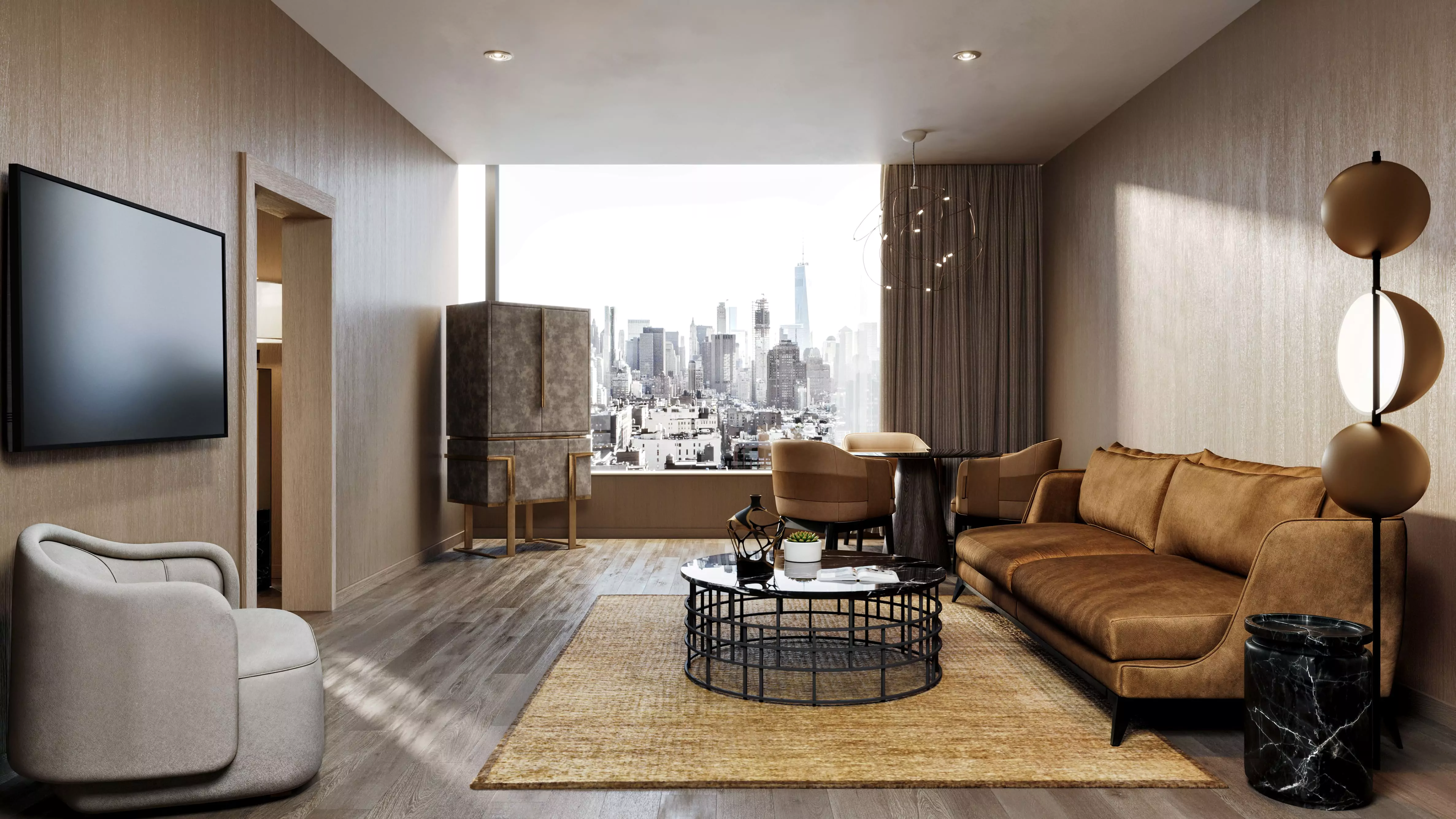
Luxury hospitality sells a feeling long before it sells a room. Increasingly, that feeling is built — rendered, lit, and composed — well before a property opens its doors. Photorealistic 3D visualization has become the medium through which atmosphere and intent are communicated, giving developers and operators a way to present a space exactly as it is meant to be experienced.
Why visualization, not photography
Photography captures what exists; visualization captures what is intended. A camera is bound by site conditions, light, and timing. A rendering is composed deliberately — every material, fixture, and fall of light chosen to convey the character of a space. For a property still in development, that distinction is decisive: the work can be marketed, refined, and sold while it is being built.
The work
Exterior & interior rendering. Photorealistic images of a space as it will be — architecture, materials, and lighting resolved with precision, so a presentation reads as elegant rather than provisional.
Custom furniture modeling. Bespoke pieces modeled to sit naturally within the larger design, faithful to upholstery, proportion, and detail.
3D floor plans. Layouts rendered so the flow of a property can be understood and felt, not just measured.
Digital & interactive maps. Interactive ways to situate a property in its surroundings — amenities, approach, and location, presented with the same care as the interiors.
Virtual reality. Immersive walkthroughs that let a guest move through a space before it exists, building an emotional connection ahead of the first visit.
Orbis brings architecture, interior design, branding, marketing, and visualization under one roof — so the image of a place and the place itself are shaped by the same hand. To discuss a project, write to hello@orbisdesign.group.